
Why Is a Quality Assurance Tester Needed on a Software Development Team?
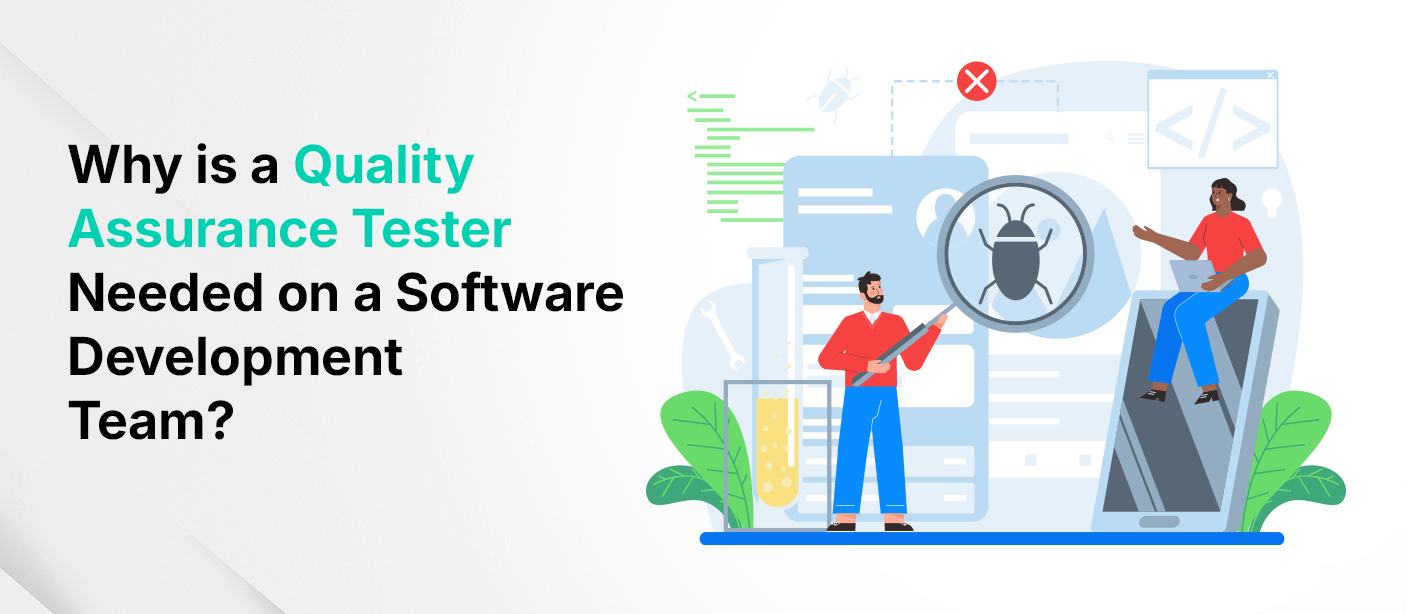

Building software is a lot like playing a team sport; every person has a clear role, and each part matters. Yet we often overlook the heroes who protect the success of the whole project. These heroes are the quality assurance testers. They watch for problems, guide the team, and keep the product safe. Without them, software can fail at the worst moment. Since users expect fast, smooth apps, quality matters more than ever.
In 2020, Bloomberg reported that the Pentagon had invested $15 billion to remove the bug from the F-35 jets' software. QA protects your time, money, users, and brand; that is why teams rely on testing throughout the custom software development process. This also explains why QA is important in software development. Strong QA reduces risk, supports growth, and builds trust.
Today, the role has grown even bigger with AI tools that help testers work faster and smarter. These tools allow teams to adapt to changing user needs, handle complex systems, and release updates without fear of breaking old features.
Let’s explore how QA shapes the future of software and why it remains essential across all industries.
QA as the Team’s Defense: Why the Role Matters
A software team is more likely to be a football team. Some players shine on the field, while others protect the goal. QA testers act like defenders who watch the whole game. They stop threats before they reach users. This helps teams release safer and more stable apps. When you add a dedicated QA team, you build a strong shield around your project.
Testers look at the software from a user’s point of view. They find issues that developers may skip because they see the product daily. This outside view brings balance. Testers check functions, flows, and screens to ensure everything feels right. Their actions help users trust your software from the first click.
AI tools also support testers now. AI learns patterns, predicts problems, and speeds up test coverage. Even with advanced tools, humans remain vital because they bring insight and empathy. When both work together, quality reaches a new level.
AI-Enhanced QA: Modern Tools That Boost Quality
Today’s QA teams use AI to find bugs faster and test deeper, which expands the traditional role. AI helps create test cases, track changes, and predict weak areas before they break. This means fewer surprises and smoother releases. AI also supports QA automation testing services by making scripts adapt as features change.
Below is how AI strengthens QA today:
- It creates test cases faster using past data.
- It spots hidden bugs using pattern checks.
- It predicts risks early.
- It speeds up test cycles using smart automation.
AI helps testers focus on thinking, not repeating. With AI-driven power, even offshore software testing services gain speed. They help teams test around the clock with better tracking and coverage. When teams blend human insight with AI support, they deliver software that feels stable, safe, and ready for growth.
How Manual and Automation Testers Protect Quality
ü Manual Testers
Manual testers act like center backs in football. They protect the software by exploring it with care. They find bugs; humans are best at spotting design issues, confusing steps, or odd behavior. They use their senses to guide testing decisions.
ü Automation Testers
Automation testers act like full-backs who defend and support the flow. They write scripts that repeat checks fast. This removes repeated tasks and cuts mistakes. Automation helps teams move faster while staying safe.
Both types of testers support QA in software development. Manual testing gives insight while automation provides speed. Together, they protect the project. When paired with software testing services company support, teams gain even more structure and skill.
Why a Quality Assurance Tester is a Must for the Software Development Team
Testing helps teams avoid costly mistakes. Since users expect smooth and safe products, quality cannot wait until the end. QA testers bring structure and clarity from start to finish.
Below is a table that shows how QA prevents common issues:
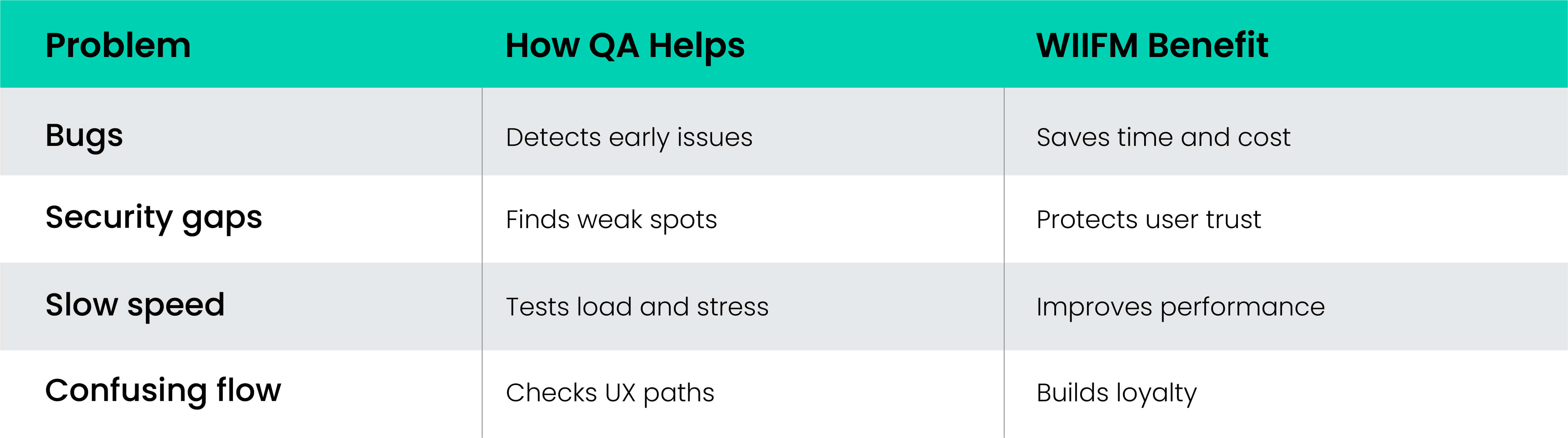
These steps support teams using independent software testing services. They gain an outside view to challenge assumptions. Because QA testers focus on real user needs, they help the team think ahead instead of reacting late.
How QA Improves UX and Builds User Trust
Users decide fast if an app feels good or not. That is why QA testers test from the user’s point of view. They try new paths, click every button, and check how easy the flow feels. If a part feels slow or confusing, they share clear notes with developers.
Here’s how QA makes software enjoyable:
- They check smooth paths across screens.
- They look for clear labels and steps.
- They test the design for comfort and ease.
Good user experience starts with good testing. When UX feels smooth, users stay longer. This supports your brand and reduces support issues. With QA testing services, teams track all UX notes and fix issues early. When users feel safe and guided, they trust your product and return again.
QA Across the Development Process: How Testers Shape Success
QA does more than test at the end. They support every phase of the project. This helps teams fix issues early and move smoothly through each stage.
Here is how QA helps at each point:
1. Test Planning and Strategy Development: The AI-powered tools, such as Microsoft Azure Test Plans and Google Cloud Test Lab, help the QA team to create dynamic strategies by examining the historical data and finding out the areas prone to failure.
2. Test Case Development and Run Process: A framework, for example, NVIDIA Clara Guardian and OpenAI Codex, automates test case generation, enhances the accuracy, and minimizes human effort.
3. Defect Capture and Monitoring Procedures: All the AI-powered bug tracking tools, like Oracle Cloud Observability and Management Platform or IBM Watson AIOps, detect bugs in real time and predict the analytics that cause the failure of software.
4. Test Documentation and Results Review: Platforms such as Meta’s Llama and AWS DevOps Guru streamline documentation tasks, review test results, and prepare stakeholder-ready reports.
This process supports teams using outsourced QA when extra support is needed. It also strengthens long-term software quality assurance testing cycles by preventing late-stage failures. QA involvement at every step ensures that quality grows with the product. It also supports developers by offering quick feedback so problems never pile up.
How QA and Development Teams Work Together in the AI Era
Developers and testers work best when communication stays open. With AI tools, this teamwork becomes stronger and faster. AI highlights risky code areas before problems appear. It also explains patterns that help both teams plan better. When testers and developers unite, the whole product improves.
AI enhances teamwork by:
a. Early Defect Detection: AI-based code review tools such as DeepCode and CodeGuru Reviewer (AWS) identify risks before release, enabling teams to address concerns ahead of deployment.
b. Proactive Quality Assurance: Using platforms like DeepCode and CodeGuru Reviewer, teams can detect weaknesses in code early and mitigate issues before they reach production.
c. AI-Supported Code Evaluation: Tools including DeepCode and CodeGuru Reviewer scan code for potential faults before deployment, guiding teams toward quicker resolution.
d. Risk Forecasting in Code: DeepCode and CodeGuru Reviewer apply AI models to pinpoint problem areas early, helping developers and testers respond before rollout.
Teams using QA testing work smarter because AI removes guesswork. It shows possible failures before they happen and supports both teams with meaningful insights. When developers and testers communicate well, software becomes easier to maintain and safer to release. This creates a healthy cycle where quality grows with every update.
Why QA Testing Saves Time and Money
Many think QA adds cost, but in reality, it saves cost. Problems found late are expensive. Problems found early are cheap. Good QA prevents delays, protects users, and ensures the release stays stable. When testing becomes part of the full process, teams avoid chaos at launch.
Teams that skip testing often face:
- Costly fixes after release.
- Lost users and negative reviews.
- Security risks that damage trust.
- Unplanned delays and hotfixes.
With QA automation testing services, teams check more features without slowing development. With independent software testing services, they gain deep insight and wider testing coverage. Strong QA reduces pressure on developers, lowers long-term maintenance costs, and supports consistent growth. It also helps create a stable foundation for future updates and new features.
AI-Driven Approaches to Strengthen Developer–QA Collaboration
Building strong cooperation between development and QA teams is essential for consistent project outcomes.
AI-based platforms support this collaboration through the following practices:
Ø AI-Supported Agile Coordination
Solutions like JIRA Align AI improve project tracking, offering clearer task management and real-time visibility into issues.
Ø Improving Visibility Across Teams
Teams benefit when activities, updates, and progress are accessible to everyone. Open communication prevents redundant work and keeps all contributors aligned. Workflow management systems help maintain consistent updates and clarity.
Ø Cross-Skilling Between Developers and QA
Encouraging shared learning between both groups improves understanding of each other’s workflows. This shared knowledge strengthens communication and enhances team performance.
Ø Connecting Bug Fixes to Business Priorities
Teams should maintain a solid understanding of user expectations and overall business goals. This helps them determine which issues deserve priority, whether resolving critical defects or addressing customer concerns.
Ø Business-Driven Development (BDD)
Applying BDD enables QA to build test scenarios based on business rules, while developers produce the corresponding code. This shortens feedback loops and ensures the software aligns with required functionality.
Ø AI-Enhanced Test Automation
Automation frameworks such as Selenium, supported by AI-based self-healing capabilities, adjust test scripts as applications change, reducing manual upkeep.
Challenges Confronting QA Testers in an AI-Enabled Landscape
Although AI continues to reshape QA practices, testers still encounter challenges that require careful oversight:
Ø Evolving Project Requirements
Tools like Google AI Cloud services and Insights help teams assess changing requirements and adapt promptly.
Ø Time Limitations and Scalability
AI-driven parallel execution tools help reduce delays, enabling faster test cycles and shorter release timelines.
Ø Test Data Complexity
Synthetic data solutions such as Microsoft’s Turing AI allow teams to generate realistic datasets without exposing sensitive information.
Ø Ongoing Script Maintenance
AI-enabled self-healing automation solutions like Testim.io help reduce the effort required to maintain test scripts.
Ø Managing Diverse Testing Environments
Testing across multiple platforms, devices, and configurations often requires extensive setup and coordination.
Ø Handling Defects Throughout Their Lifecycle
Effective oversight is needed to capture, review, and resolve defects across all stages, maintaining clear communication throughout the process.
The Outlook for AI in Software Quality Assurance
AI’s influence on QA continues to grow, offering new ways to improve testing speed, insight, and overall effectiveness. As organizations move forward, integrating AI-focused QA capabilities becomes increasingly important for staying competitive. Future advancements may include:
Ø Self-Learning AI for Automated Issue Detection and Correction
Systems capable of recognizing patterns and addressing faults with minimal human input.
Ø AI-Enhanced Performance Monitoring
Tools that analyze performance in real time and adjust configurations for optimal operation.
Ø Conversational AI for Test Execution
Testers always communicate with AI agents using natural language to adjust scenarios, streamline execution, and refine the expected results.
Open-Ended Wrap-Up
A strong QA process shapes the success of every software project. When teams combine skilled testers, AI-driven support, thoughtful planning, and steady communication, they deliver software that users can rely on. As systems grow more complex and expectations rise, the responsibilities of QA professionals also expand. Effective QA safeguards your objectives, strengthens user confidence, and supports long-term growth.
At Amrood Labs, we apply advanced AI-based QA solutions to help organizations improve their testing workflows and achieve consistent results. Our team configures and integrates leading AI tools such as AWS DevOps Guru, Microsoft Azure Test Plans, and Google Cloud AI-powered Insights to enhance efficiency across your QA operations.
If you would like guidance on improving your QA framework, you can reach us at sales@amroodlabs.com. We offer a complimentary consultation to discuss how Amrood Labs can support your initiatives and help you implement a stronger, AI-enabled QA process.
Table of Content
Share Now
.png)



.png)
Learn why parallel Git branches create duplicate migration numbers and how to fix migration conflicts using GitHub Actions. Includes workflow code, testing strategies, and database migration tools.
Six real JWT vulnerabilities, working exploits, and the fixes that stop them. Includes OWASP guidance and a 2026 JWT security checklist for developers.

